
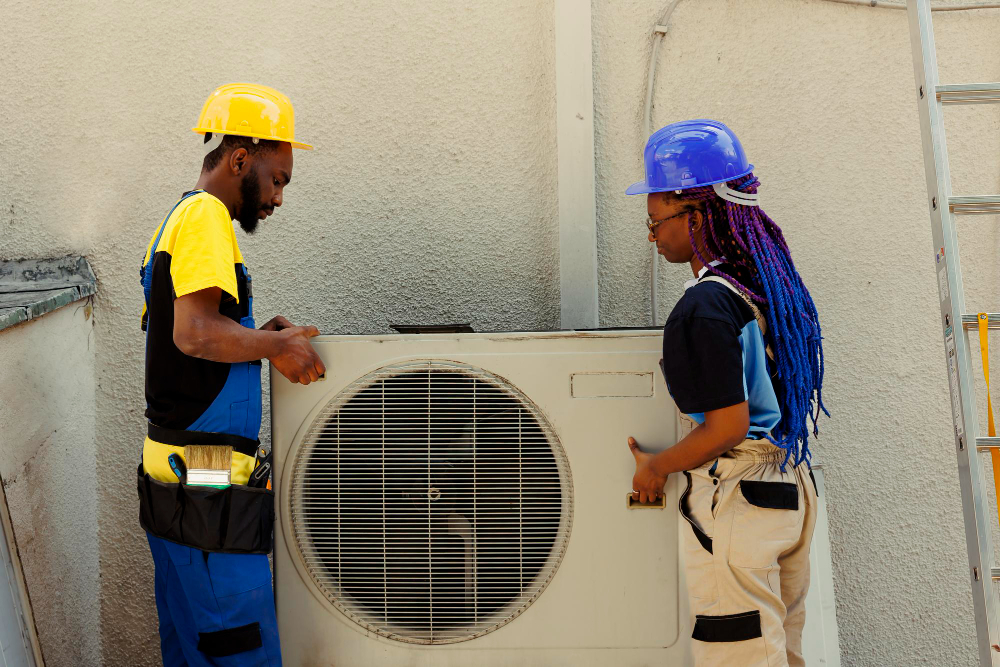
The air filter is one of the smallest parts of your air conditioning system, but it has an outsized effect on how well your system cools. A clean filter keeps air moving freely and your home comfortable. A dirty one quietly drags down performance, raises your energy bills, and can even cause your AC to break down. In a dusty climate like Las Vegas, filters clog faster than many homeowners expect. Here is how dirty air filters affect cooling performance, the warning signs to watch for, and how often you should change them.
What Your Air Filter Does
Your air filter has two main jobs. First, it protects your equipment. As air is pulled into the system, the filter traps dust, dirt, and debris before they reach sensitive parts like the blower and coil. Without it, that buildup would clog and damage the system.
Second, the filter helps clean the air you breathe. It captures particles that would otherwise circulate through your home. To do both jobs, air has to pass through the filter freely. When the filter is clean, air flows easily. When it is clogged, everything downstream suffers.
How a Dirty Filter Weakens Cooling
The core problem with a dirty filter is restricted airflow. When dust builds up, less air can pass through. Your system then struggles to move enough cool air through your home, so rooms take longer to cool, and some never feel comfortable at all.
To compensate, the AC runs longer and works harder, yet still delivers weaker cooling. You may notice uneven temperatures, weak airflow from the vents, and a system that seems to run all the time without keeping up. In the extreme Las Vegas heat, a clogged filter can be the difference between a comfortable home and one that never cools down. It is one of the first things to check when cooling drops off.
Frozen Coils and Added Strain
A dirty filter can also lead to a frozen evaporator coil. When airflow is restricted, the coil gets too cold and ice forms on it. A frozen coil blocks cooling almost entirely, and melting ice can cause water damage. If you see ice on your indoor unit, that is a clear sign to shut the system off and check the filter.
The extra strain goes beyond the coil. When the system works harder for long periods, every part wears faster, including the compressor, the most expensive component to replace. Over time, a neglected filter leads to more breakdowns and a shorter system life. If your AC has frozen up or stopped cooling, our AC repair Las Vegas team can diagnose the cause and get you running again.
Higher Energy Bills
A dirty filter costs you money every month it stays in place. Because the system has to run longer and work harder to cool your home, it uses more electricity to do the same job. In a Las Vegas summer, when the AC already runs constantly, that added energy use can push your bills noticeably higher.
The fix is one of the cheapest in-home maintenance tasks. A new filter costs only a few dollars, yet it can restore efficient airflow and lower your cooling costs. Few home improvements offer a better return for the effort.
Worse Indoor Air Quality
A clogged filter does a worse job of keeping your air clean. Once it is packed with dust, it cannot capture much more, so additional particles slip past and recirculate through your home. Dust, pollen, and other allergens build up in the air you breathe.
This matters even more for households with allergies, asthma, or pets. Clean filters and the right filtration for your needs help keep indoor air healthier. If air quality is a concern, our indoor air quality solutions go beyond a basic filter to help your family breathe easier.
Signs Your Filter Needs Changing and How Often
A few signs point to a dirty filter. Weak airflow from the vents, longer run times, rising energy bills, more dust around the home, and a system that cannot reach the set temperature are all common clues. The simplest check is to pull the filter out and look at it. If it is gray and coated with dust, it is time for a new one.
As a general rule, change your filter every one to three months. In Las Vegas, where dust is heavy, monthly checks are smart during summer. Homes with pets or allergy sufferers may need to change filters even more often. Making it a habit is one of the easiest ways to protect your comfort and your system. A seasonal tune-up is a good time to review your filter routine with a professional.
Frequently Asked Questions
Can a dirty air filter really stop my AC from cooling?
Yes. A clogged filter restricts airflow, which weakens cooling and can even freeze the evaporator coil and stop cooling entirely.
How often should I change my air filter in Las Vegas?
Every one to three months is the general rule, but Las Vegas dust means monthly checks are smart in summer
Does a dirty filter increase my energy bills?
Yes. When airflow is restricted, the system runs longer and works harder, using more electricity to cool the same space.
Can a dirty filter damage my air conditioner?
It can. Restricted airflow strains the system, can freeze the coil, and forces parts like the compressor to work harder.
Is a higher MERV filter always better?
Not always. A higher MERV filter captures smaller particles, which is good for air quality, but a filter rated too high for your system can restrict airflow and hurt cooling.
Conculsion
A dirty air filter is a small problem that causes big ones. It weakens cooling, raises energy bills, strains your system, and lowers your indoor air quality. The fix is simple and cheap: check your filter often and replace it when it is dirty, especially during the dusty Las Vegas summer. Pair that habit with regular professional maintenance, and your AC will cool better and last longer.
Infinity Heating and Cooling is a certified Trane dealer serving the Las Vegas Valley with expert AC repair, maintenance, and indoor air quality solutions. To keep your system running at its best, call (702) 291-2000, schedule an appointment, or contact us today.
