
Yes. The more useful questions are how much, and whether it explains the bill sitting in front of you.
A filter is the cheapest part of the system and the easiest thing to blame, so it takes credit for plenty of high bills it had nothing to do with. It also causes real ones. The difference takes about two minutes to establish.
What the savings figure actually means
Search this topic and the same number appears everywhere: replacing a dirty, clogged filter with a clean one can lower an air conditioner’s energy consumption by 5 to 15 percent, attributed to the U.S. Department of Energy.
The figure is real, and it originates from DOE material. What DOE does not publish alongside it is any methodology, meaning no sample size, no test conditions, and no definition of how dirty the filter in question was. Treat it as a directional government estimate, not a promise about your house.
There is a second thing that range does not say, and it matters more than the percentage. It describes air conditioning energy, not your entire bill. Your lighting, water heater, pool pump, and everything else are unaffected by a filter. So a 10 percent reduction in cooling energy is not a 10 percent reduction in what you pay, and anyone promising otherwise is selling something.
The answer depends on what kind of blower you have
This is the part almost nobody writes down, and it changes the whole calculation.
Research on the effect of filter pressure drop on air conditioning systems found two different outcomes depending on the fan. With a constant-speed blower, the older style found in most systems installed before roughly the last decade, cooling energy use climbs as the filter loads up. The fan spins at one speed regardless, so restriction shows up as reduced airflow, longer runtime, and more cooling energy consumed.
The practical takeaway cuts both ways. If you have an older system, a neglected filter is a genuine energy expense. If your system is newer, it will hide a dirty filter longer, which means you are less likely to notice until airflow problems show up somewhere else. Homeowners considering AC installation should know that variable-speed equipment does not remove the need to change filters; it just changes where the penalty lands.
Why it adds up faster in this climate
A percentage means more when the system runs more, and systems here run a great deal.
The cooling season is long, and many valley homes run the air conditioner for most of the day through summer. A small efficiency penalty applied across that many runtime hours accumulates differently than it would in a mild climate where the system cycles a few times an afternoon.
Valley dust loads filters faster than manufacturer intervals assume, which is why filter condition belongs in regular AC maintenance rather than on a mental note.
The two-minute test
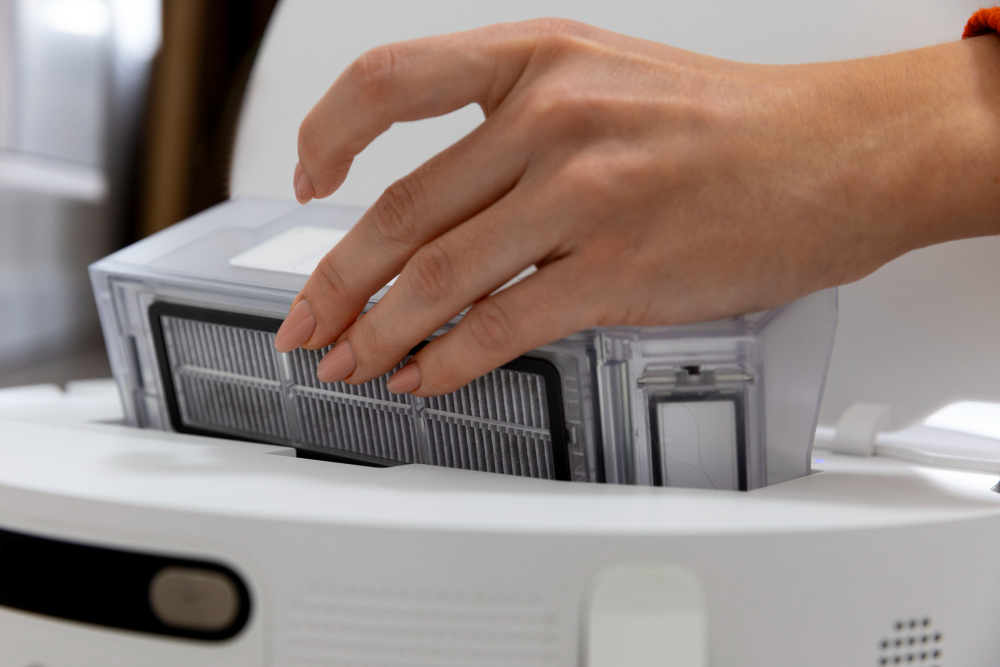
Pull the filter out and hold it up. That settles more than any article can.
If it is grey, matted, and light no longer passes through it, you have found a genuine suspect. If it looks reasonably clean, the filter is not why your bill jumped, and continuing to replace it will not change anything.
Then check the comparison you are making. Homeowners usually compare this month against last month, which mostly measures the weather. Compare against the same month last year instead. A hotter stretch, a rate change, or more people home during the day will all move a bill without anything being wrong with the equipment.
The MERV trap
This one catches the most conscientious homeowners specifically, which is what makes it worth knowing.
EPA guidance for improving indoor air suggests a filter rated MERV 13, or as high as your system fan and filter slot can accommodate. That second half is the part people skip. Install a filter rated well beyond what your equipment was designed around and you create the exact restriction you were trying to avoid, starting on day one rather than after two months of dust.
If air quality is the real goal, that is worth solving properly rather than at the hardware store. Dedicated indoor air quality equipment handles filtration without choking the system that has to move air through it.
Where the money actually goes
The cost of a neglected filter is not only extra kilowatt-hours; the rest is harder to undo.
When restriction gets bad enough, air finds its way around the filter rather than through it. That unfiltered air carries dust straight onto the evaporator coil. A coated coil absorbs heat poorly, and a new filter does not fix it, since the dirt now sits on the coil rather than in the filter slot. That takes a professional cleaning to reverse.
Restricted airflow can also drop the coil below freezing, at which point ice forms, cooling output collapses, and the system runs continuously while blowing warm air. That situation usually ends in AC repair rather than a filter change, and it started with a five-dollar part.
What to do about it
Check the filter monthly during cooling season and keep spares on hand in the size printed on the frame of the one installed now.
If the bill is still higher than it should be with a clean filter in place, stop guessing and start measuring. Air conditioning service includes checking airflow, refrigerant charge, and electrical draw, which is how you find what is actually consuming the energy instead of replacing parts in hope.
Frequently asked questions
1) How much will a clean filter save on my bill?
The commonly cited range is 5 to 15 percent of air conditioning energy use, though that estimate carries no published methodology and applies to cooling energy rather than your whole bill.
2) My AC is newer. Do filters still matter?
Yes. A variable-speed system compensates for restriction by working the blower harder, so the energy penalty shifts rather than disappears, and the airflow problems still arrive eventually.
3) Is a cheaper filter changed often better than an expensive one left in?
Usually. A basic pleated filter replaced on schedule outperforms a high-efficiency filter left in too long, both for airflow and for cost.
4) My bill jumped but the filter looks clean. What now?
Compare against the same month last year rather than last month, then check the outdoor unit for a dirty coil or blocked airflow. If neither explains it, the answer is in measurements that require instruments.
5) Can a dirty filter make my house feel warm while the AC runs?
Yes. Restriction lowers cooling capacity and, in worse cases, freezes the coil, which causes the system to run constantly while delivering little cool air.
Conclusion
A dirty filter does raise cooling costs, mostly by forcing longer runtime on older systems and more blower work on newer ones. It is also the first thing to rule out, because checking it is free and takes a minute.
If the filter is clean and the bill still looks wrong, the answer is in the readings rather than the filter slot.
Infinity Heating and Cooling has served valley homeowners since 2012 with NATE-certified technicians and around-the-clock availability. Call (702) 291-2000 or schedule a service visit to find out what is actually driving the number.
