
Before you buy a home, check five things about its HVAC system. They are the age of the equipment, the refrigerant it uses, the way it runs on the day you visit, the condition of the ducts, and the service records. In Las Vegas the air conditioner runs for much of the year, so a worn system is a cost you want to know about before closing.
Infinity Heating and Cooling has served homes across the Las Vegas Valley since 2012. This guide follows the order of a showing, from the thermostat to the paperwork.
At the thermostat
Ask the agent whether you can run the system. Set it to cool, drop the setting a few degrees below room temperature, and listen. The outdoor unit should start within a few minutes, and the nearest vent should blow cold air soon after. Repeat the test in heat mode. A system that starts with a bang, shuts off after a minute or two, or blows air that never changes temperature needs a closer look.
At the outdoor unit or on the roof
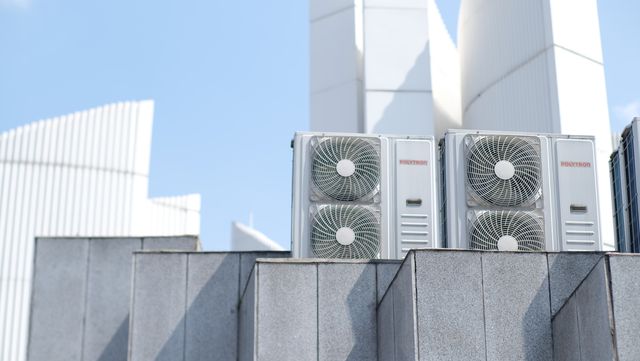
Many older Las Vegas homes have a single package unit on the roof, and newer ones usually have a condenser on a pad beside the house. Find the nameplate on either one and photograph it. It gives you three facts:
- Age. The manufacture date is printed on the plate or coded into the serial number. ENERGY STAR lists an air conditioner or heat pump more than 10 years old among the signs that replacement may be near.
- Refrigerant. A plate that lists R-22, also written HCFC-22, marks an older unit. The EPA ended production and import of R-22 on January 1, 2020. Owners are not required to replace these systems, and reclaimed R-22 remains available for service.
- Size. The model number carries the cooling capacity, which a technician can check against the floor area.
Bent or clogged coil fins, a rusted cabinet, and torn insulation on the copper line all point to deferred care. Oil stains at a refrigerant connection can mean a leak, and the EPA advises having a technician find and fix a leak instead of adding refrigerant to a leaking system. A leak needs AC repair in Las Vegas before the system can be trusted through a summer.
At the furnace or air handler
The indoor unit is usually in the garage, a hallway closet, or the attic. Check the filter first. A filter packed with dust suggests the system has run without routine care. Next, look for:
- Rust or water stains in or under the drain pan
- Scorch marks or soot around the burner compartment of a gas furnace
- A furnace nameplate more than 15 years old, the age ENERGY STAR lists for furnaces
Soot, a yellow burner flame, or a burning smell at a gas furnace calls for furnace repair in Las Vegas before anyone relies on the heat.
If the home has a heat pump, run it in both modes. A unit that cools but will not heat is a common reason for heat pump repair.
In the rooms
Walk every room with the system on and hold a hand at each supply vent to compare airflow. ENERGY STAR lists rooms that are difficult to heat and cool, stuffy rooms, and ducts located in an attic or garage among the signs of poorly performing ducts. It estimates that a typical house loses about 20 to 30 percent of the air moving through its ducts to leaks, holes, and poor connections.
In a two-story home, check the upstairs last. Our article on why the upstairs gets so hot in Las Vegas homes explains the usual causes.
Look at the vents and return grilles for dust streaks. Heavy dust can point to duct leaks or to a need for indoor air quality services such as better filtration.
In the paperwork
Nevada sellers complete the Seller’s Real Property Disclosure Form. It asks whether the seller is aware of any problems or defects with the heating system and the cooling system. Under NRS 113.130, the form must be served on the buyer at least 10 days before the property is conveyed. Read those two lines, then ask for:
- Service records and the name of the company that maintained the system
- The installation date and the permit for any replacement
- Model and serial numbers, so you can ask the manufacturer what warranty remains and whether it transfers
- Recent summer power bills
A system kept on a plan for HVAC maintenance in Las Vegas leaves a dated record of each visit, which is the best evidence of how it was treated.
What the home inspection covers
A Nevada home inspection includes the HVAC system. Under the state standards of practice (NAC 645D.530 and 645D.540), the inspector identifies the type of system, its energy source, and the number of units. The inspector also opens readily accessible panels and evaluates the readily accessible controls and components.
That is a visual and operational check of what can be reached. Refrigerant charge, electrical tests under load, and duct leakage tests are HVAC trade work, and they are not on that list.
When to bring in an HVAC technician
Book a technician during the due diligence period in your purchase agreement if any of these apply:
- The equipment is past the ENERGY STAR ages
- The nameplate lists R-22
- The system failed any of the checks above
- The seller has no service records
Ask for written findings that cover refrigerant pressures, the temperature drop across the coil, electrical readings, the drain line, and the duct connections. Infinity’s seasonal maintenance plans include a 21-point inspection with system performance checks and component testing.
What to do with the findings
A written report gives you choices before closing. You can ask the seller to make the repair, ask for a credit, or plan for the expense yourself. Our guide to AC repair vs. replacement explains how to weigh an aging system.
If replacement is likely, ask for a written quote before closing. AC installation in Las Vegas starts with sizing the system to the house and checking that the ductwork suits the new equipment.
Frequently asked questions
1) How old is too old for an air conditioner in Las Vegas?
ENERGY STAR lists 10 years for an air conditioner or heat pump, and 15 years for a furnace, as ages when replacement may be worth considering. Service history and current performance count as much as age.
2) Does a home inspection include the HVAC system?
Yes. Nevada’s standards of practice require the inspector to inspect the heating and air-conditioning systems, including the operating controls. It is not a technician’s diagnostic.
3) Should I avoid a house with an R-22 air conditioner?
No. The EPA does not require owners to replace R-22 equipment, and reclaimed refrigerant is still available for service. Treat R-22 as a sign of age and plan for replacement sooner.
4) Who pays for HVAC repairs found before closing?
That is negotiated between buyer and seller under the purchase agreement. Ask your real estate agent whether to request a repair or a credit.
5) Can I test the air conditioner in winter?
A cooling test is less reliable in cold weather, and some manufacturers advise against running the compressor at low outdoor temperatures. A technician can still check the coils, the electrical parts, and the heating side.
Conclusion
The nameplate, a test run, and the service records answer most questions in a single showing. A technician’s visit answers the rest while you can still negotiate.
Infinity Heating and Cooling holds Nevada license C21 #0077587, and its technicians are NATE-certified. To have a system checked before you close, schedule an appointment or call (702) 291-2000.
